
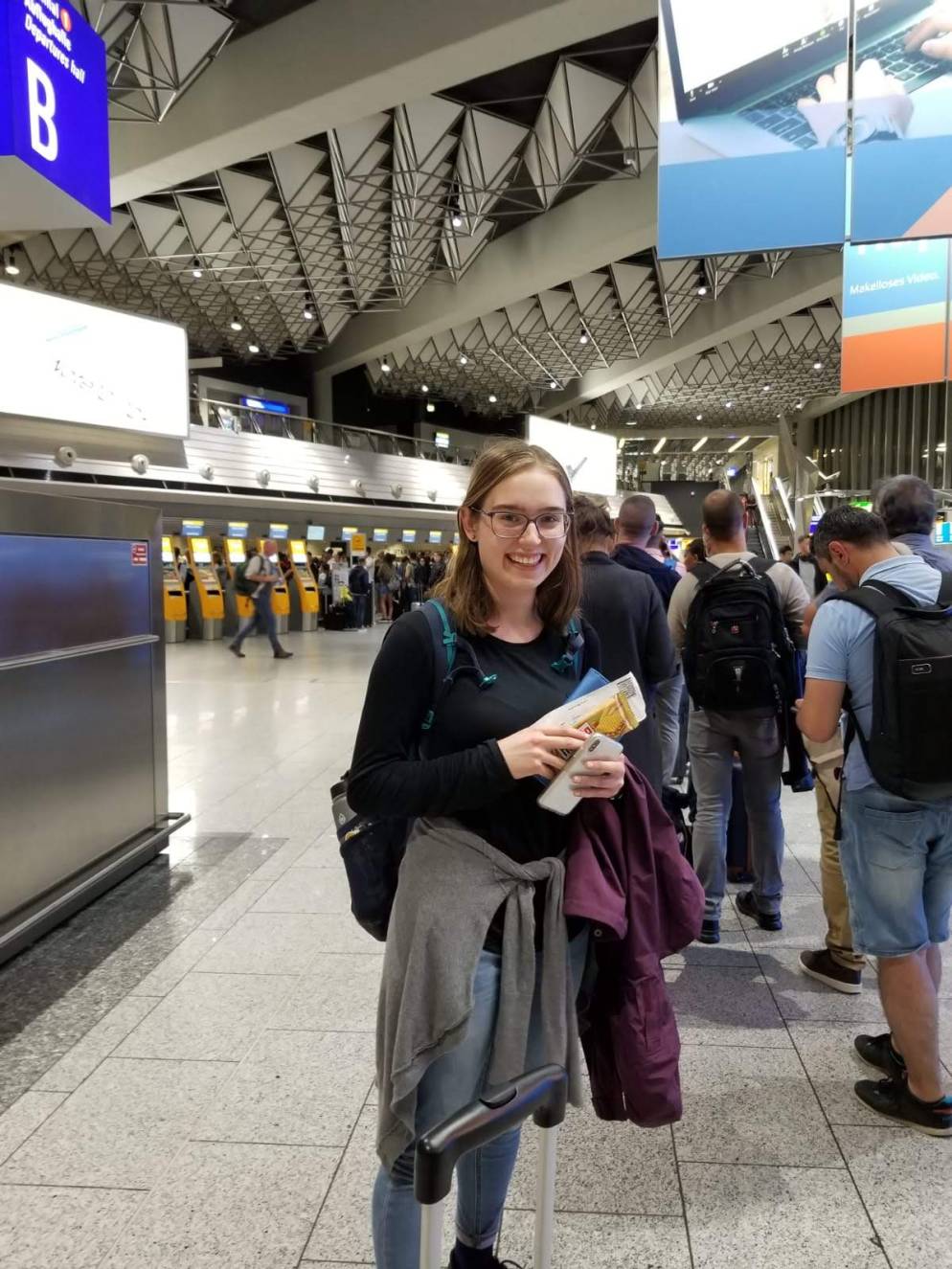
I’ve been in Europe for a week already and it has been a whirlwind! Faith and I decided to visit Bucharest for our first few days here. We flew in to Copenhagen via Helsinki, and then to Bucharest via Frankfurt, or so we planned. We got to Copenhagen without issue, but then our flight to Frankfurt was diverted midair due to a storm. We landed in Nuremburg, and by the time we landed in Frankfurt, it was almost midnight and there were no flights until the morning! Even with a super long line, the airline was incredibly kind and rebooked our flight and gave us a hotel room for the night. The next morning, we flew to Bucharest.
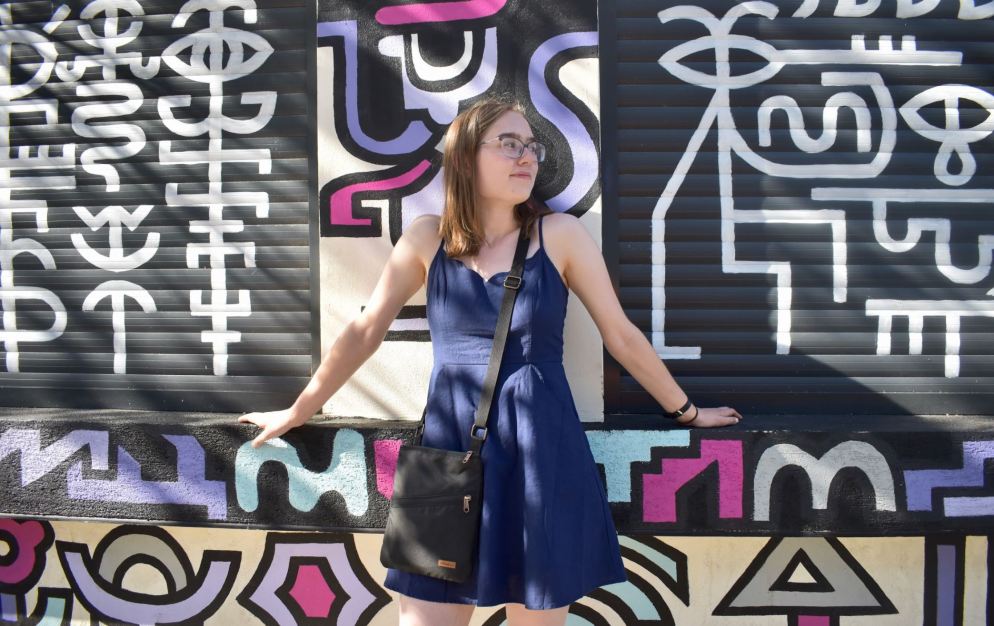
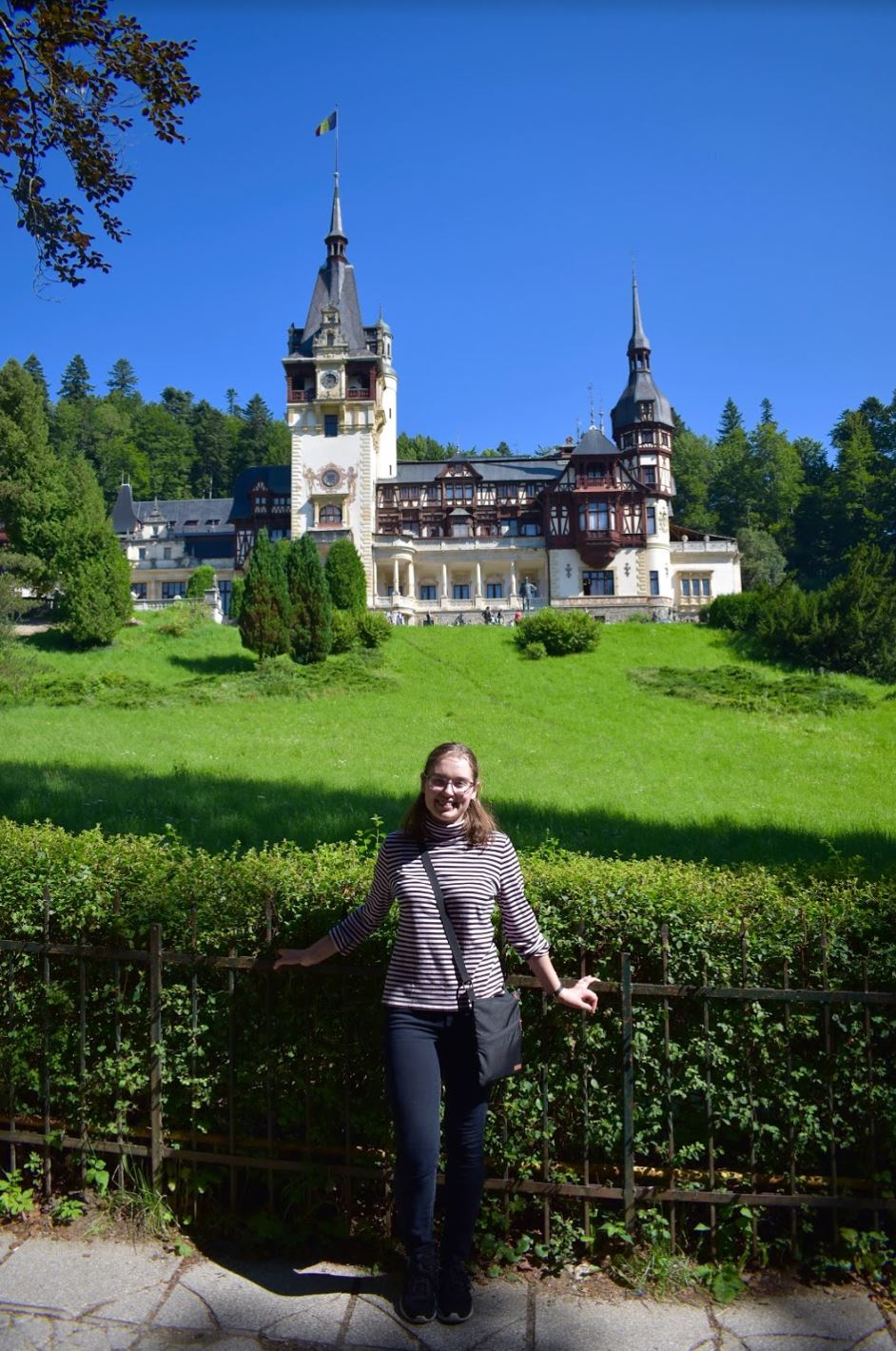
Since we got rebooked, I wasn’t able to go to Timisoara as planned. Instead, Faith and I decided to visit Pele’s Castle in Sinaia. We walked about a mile and a half to the train station and after about an hour there and some help from some kind Romanians, we bought tickets. After we bought the tickets, we bought groceries and went back home, but unfortunately got locked out! Our host was so kind and spent two hours helping us get back in. While we waited to return to the apartment, we explored the area and found some super cool street art just down our street.
The next morning, we took the train to Sinaia. The castle itself was beautiful, but definitely the most crowded area we saw in all of Romania! We also stopped by a gorgeous monastery in the city.
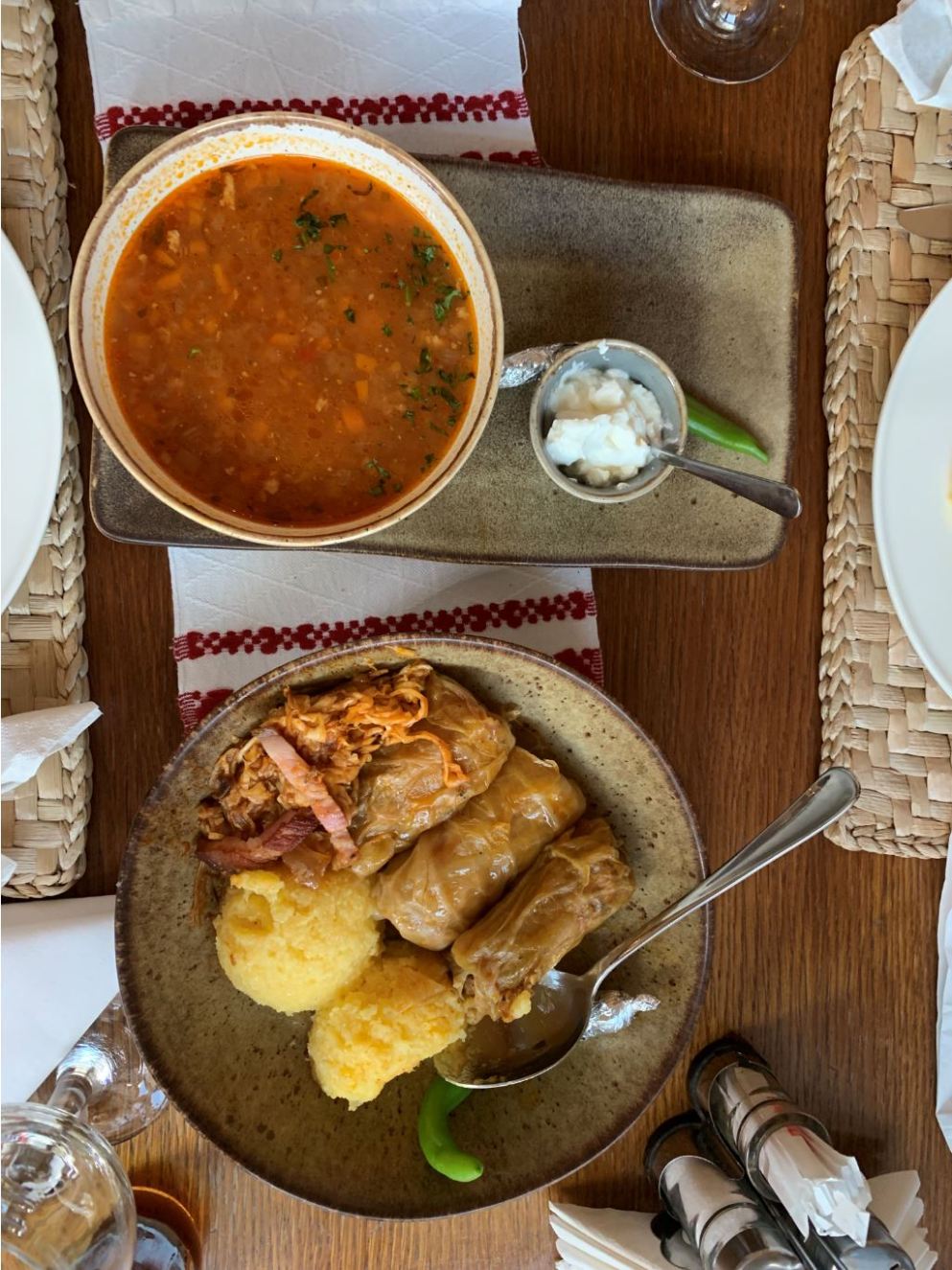
We also tried traditional Romanian cabbage rolls and sour soup – both were delicious to me. The cabbage rolls were quite different from how my family makes them, as they pickle the cabbage leaves, instead of boiling them, and use a chopped meat filling. The pickling of the cabbage leaves added a really nice acidity to the roll, and provided much needed contrast to the fattiness of the meat.
On our next day, we walked to the Obor market, a large farmer’s style market with many meat and cheese stores upstairs. It was really interesting to see all the different fruits and veggies, some of which we recognized, and others that were new – like Catina, a small orange berry full of vitiman C, and dovlecei, a vegetable similar to zucchini.
We also took a walking tour of the city center, and learned about the history of Bucharest! It was s interesting to learn about the city’s complex history and identity from a local. The city started by the river, as many do, and was later invaded by the Ottoman Empire. After hundreds of years, Romania gained independence. This was the “Golden Age,” around the 1800s, a time when building and education flourished. Since Bucharest was up-and-coming, they followed the architectural style of the time, creating many French-inspired buildings. Later, communism took over through the 1990s. Now, Bucharest is grappling with its tangled identity. We learned so much on this tour! Since Bucharest began to flourish under the Ottoman Empire, there was very little city planning, something that was very noticeable to us as we tried to navigate the streets. One thing that was especially interesting was that now, new buildings must recreate or preserve the facades of the old buildings they are building on top of. We also learned more about the communist regime, and how the layout of Bucharest is especially influenced by its communist history. For example, the communist government would build apartment complexes around churches to hide the churches, or they would literally move buildings to create space for their new designs. Likewise when Ceaușescu, the communist dictator built new structures, he tried to mimic the French architecture he grew up with, but largely failed since there were no craftsmen who knew how to produce such refined detail.
One thing that was fascinating from the tour was the conflicting ideas about Bucharestian identity. Given the multiple histories of the cities, from the Ottomans to Communists, this makes a lot of sense. Our guide explained that especially for older folks, communism is sometimes favored because it did provide them with a home, car and vacation. However, as the saying goes “everyone is equal but some people are more equal.” This leads to the people who revolted against communism. For them, communism gave them an apartment and wages, but left the country empty. These two opposing ideas about the country’s history creates tension, especially between generations.
Finally, we went to the Village Museum on our last day to see what historical Romania looked like. There were incredible moved and reconstructed homes and churches, some of which were moved as early as the 1930s.
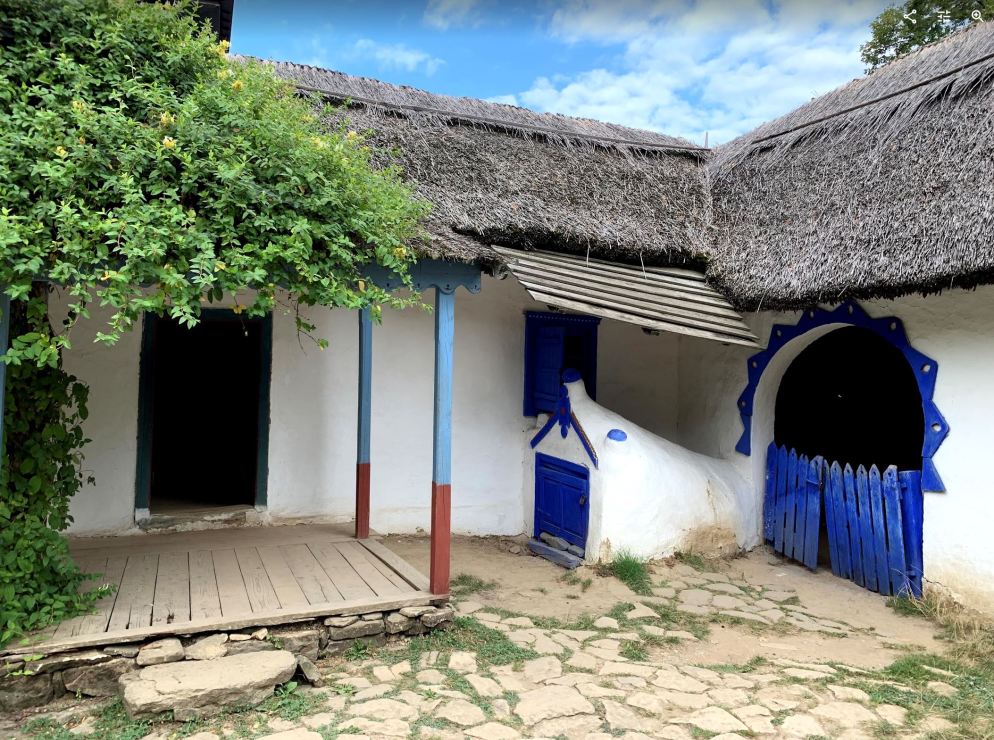
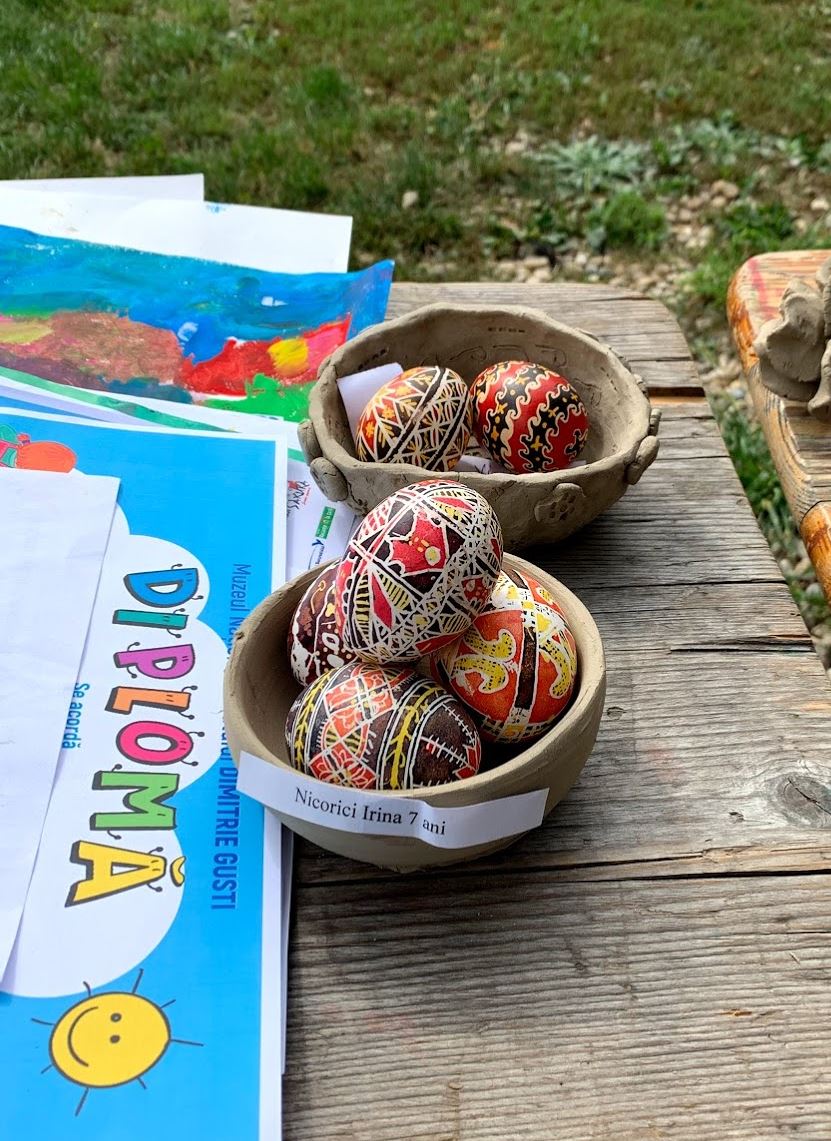
It was very exciting to see all these amazing houses. Additionally, the fair was hosting children’s work shops. One of my favorite things to see was the kids making traditional eggs – many of them far better than my attempts!
All in all, Bucharest was an incredible adventure, and I am so thankful that we took the time to explore a more “off-the-path” European area! Things I’ve learned so far:
- Flats are not acceptable walking shoes. We walked about 8 miles each day in Romania, and my feet hurt so much after just the first hour in flats! Luckly, we found a shoe store near the house and I was able to pick up some cute boots for Copenhagen.
- It is very difficult to navigate in a new city! Especially if the city lacks a grid. But in Bucharest, given its mixed history, it’s important to get lost and look in alley ways – you never know what you’ll find (but you will see a ton of churches)
- Funeral cake doesn’t look sexy but is so good. This was another more traditional food we tried. During our tour, an old woman came up to our guide and gave her some funeral cake for us to try. Our guide told us, “it’s not sexy but tastes amazing” (hence the above statement). It is milk-soaked barley with sugar and cocoa. You are only supposed to eat it during a funeral, and the guide said some of her friends love it so much, they actually seek out funerals to go to or hide it in their house!
- Given our expericne at airports and getting locked out and a little lost, I feel a lot more experienced with travel and can’t wait to do more 🙂
 Copenhagen Adventures